



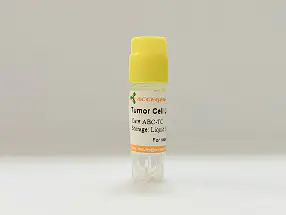
For research use only
| Cat No. | ABL-TC0134 |
| Product Type | Mouse Ovarian Cell Lines |
| Cell Type | Epithelial |
| Species | Hamster, Chinese |
| Growth Conditions | 37 ℃, 5% CO2 |
| Source Organ | Ovary |
| Product Code | CHO K1; CHOK1; CHO cell clone K1 |
CHO-K1 Hamster Ovary Cells support protein production, gene transfection, and metabolic mutant selection in bioproduction and molecular workflows.
CHO-K1 cells are a subclone of the CHO cell line, derived from an adult Chinese hamster ovary biopsy in 1957. CHO-K1 cells are widely used in biopharmaceutical production due to their rapid growth, ease of culture, and minimal chromosomal abnormalities. However, they lack the gene for proline synthesis, making them reliant on external proline for growth. These cells exhibit morphological changes in response to cholera toxin and show resistance to Poliovirus, Modoc virus, and Buttonwillow virus. Under specific culture conditions, these cells can be passaged for 10-15 generations, making them suitable for long-term experimental applications. They also express multiple glycosylation genes, which affect the quality of therapeutic proteins.
| Product Code | CHO K1; CHOK1; CHO cell clone K1 |
| Species | Hamster, Chinese |
| Cat.No | ABL-TC0134 |
| Product Category | Tumor Cell Lines |
| Size/Quantity | 1 vial |
| Cell Type | Epithelial |
| Growth Mode | Adherent |
| Shipping Info | Dry Ice |
| Growth Conditions | 37 ℃, 5% CO2 |
| Source Organ | Ovary |
| Biosafety Level | 1 |
| Storage | Liquid Nitrogen |
| Product Type | Mouse Ovarian Cell Lines |
The CHO-K1 cell line can be engineered to grow as adherent or suspension cells and have gained regulatory approval for the production of therapeutic recombinant proteins. CHO-K1 cells are an excellent host system for producing various biologics, including growth factors, hormones, monoclonal antibodies, interferons, and enzymes. Moreover, they are utilized in in vitro cancer research, especially for studying ovarian cancer. The popularity of CHO-K1 cells in protein production is due to favorable traits like rapid growth, easy cultivation, and genomic stability.
When you publish your research, please cite our product as “AcceGen Biotech Cat.# XXX-0000”. In return, we’ll give you a $100 coupon. Simply click here and submit your paper’s PubMed ID (PMID).
Ng JY, Chua ML, Zhang C, et al. Chlorella vulgaris Extract as a Serum Replacement That Enhances Mammalian Cell Growth and Protein Expression. Front Bioeng Biotechnol. 2020;8:564667. Published 2020 Sep 15. doi:10.3389/fbioe.2020.564667